Bottom-up processing is a type of information processing that processes stimuli starting from the bottom. It begins with most basic details and then moves to more complex concepts. This differs from top-down processing , where we create an overall impression of the environment and seek out evidence to support this idea. For example, someone who is visualizing an urban street might first form an overall impression that the street is busy, noisy, and chaotic. To verify the idea, they may seek out specific indications that indicate this, such as people rushing through crowds , or the sound of traffic coming from nearby cars.
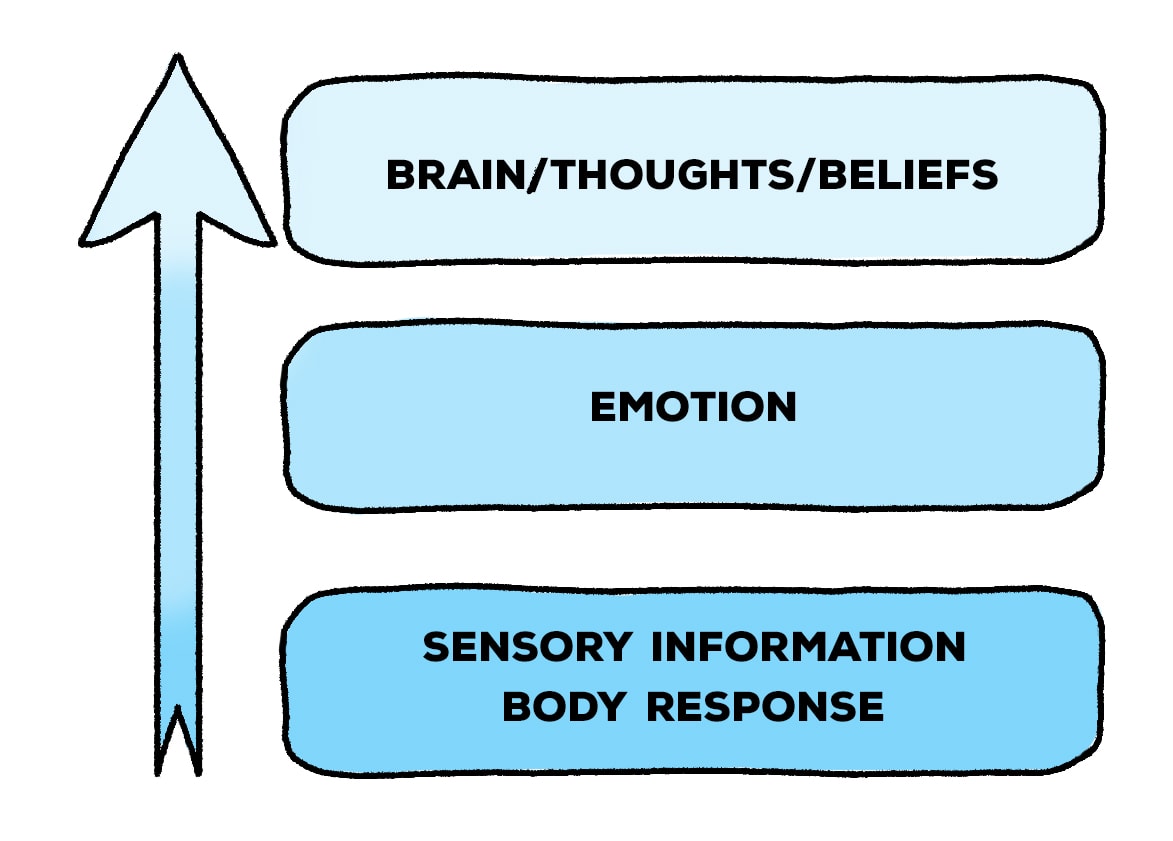
Bottom-up processing is more data-driven and analytical, and is extensively researched in connection with cognitive tasks such as memory and perception. But it is also able to play a significant role in other areas including decision-making and creative pursuits such as art or design. When utilized strategically and in the right way, bottom-up processing can result in better problem solving and greater insights into complicated situations. Bottom-up processing despite having a negative reputation in academic circles, is extremely beneficial for understanding the world around us as well as the inner workings of our bodies.
The brain’s complex functions are central to every thought and action. The processes within this intricate organ play a crucial function in everything from memory and intelligence to our moods and behaviour. The brain’s function is affected by the process that is bottom-up. This is an especially important mechanism. Bottom-up processing refers to how information is processed starting at the nerve cells’ individual level and moving up through interconnected neural pathways. It eventually affects higher cognitive functions, for example, attention or perception. This process has been found to have significant effects on memory and learning. However, it could also be helpful in the treatment of disorders like schizophrenia or Alzheimer’s. Understanding the mechanisms behind the bottom-up processing of brain function can help us uncover many of the mysteries that underlie brain function. This could open the door to innovative new techniques in neuroscience health, as well as other fields.
Bottom-up processing is how information is processed by our brains. Instead of top-down processing which is more concerned with incorporating expectations and prior knowledge into the learning process. Bottom-up processing relies only on data that is new and unstructured. Bottom-up processing can be a fantastic way to master all levels of learners by focusing on the specific aspects of learning. This includes basic vocabulary and sounds and sounds, as well as more complex concepts and concepts.
Bottom-up processing provides one advantage it allows us to analyze each piece information individually as it comes in, and allow us to take a step back. This will help us keep our attention on what we are learning which can make us more enthusiastic to discover new ideas or refine the ones we already know, or even recognize mistakes or areas for improvement. Additionally, by highlighting how different parts of information are linked by logical chains or networks, this approach helps us to see how the various pieces are connected to aid in understanding at the deeper level. Through engaging in bottom-up processing, we are able to become better learners and better communicators overall.
For more information, click Practicalpie